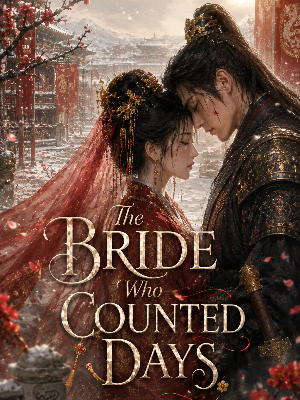
(Pei Yan)
I remember the first time I saw her.
It was raining.
I had a coarse cloth bag inside my robe, and inside the bag a piece of iron I'd paid three coppers for at a scrap stall outside the east gate. I'd taken it to four shops. Three of them said scrap. At the fourth, an old manager studied it for half an hour and then pointed at the inner edge.
"One stroke, three dots," he said. "That's the One Word House on Yonghe Street. This has been through there."
I went that same afternoon.
I didn't go in. I stood across the road under the eaves, to see what kind of shop it was.
There was a blind manager behind the counter.
And there was a girl.
Seventeen, eighteen, sleeves pushed up, holding a candle, looking at a vase for a fat customer. When she'd finished she set it down and said one word.
"False."
The fat man came off the floor. He swore. He hit the table. He said he'd paid three hundred taels for that vase on Zhuque Street, at a shop ten times the size of this one.
The girl didn't trouble to argue.
She only pushed the vase back toward him and said:
"Take it somewhere else, then. If somewhere else tells you the truth, come back and shout at me."
The fat man took his vase and went.
She bent down and went on wiping the counter.
I stood in the rain looking at that shabby little shop, and I thought:
For three years I have sold my house to buy the truth. I bought it at the big shops. I paid in thousands of taels. Everything I bought was false.
And here, a girl wiping a counter has just given a stranger three hundred taels' worth of the truth for nothing, and wouldn't take a copper for it.
I went there that day to investigate a shop.
I came away having decided to marry someone.
Wei Changsheng was executed that autumn. The Tongyuan Trading House was confiscated.
In his storeroom they found three things belonging to my mother: a phoenix pin, a jade bangle, a wooden box.
He hadn't destroyed them.
I asked Su Zhen why. She thought about it and said: "Because they're beautiful."
Jiang Jingzhi submitted a memorial confessing his own part. Four days later the edict came: stripped of office, stripped of rank, retired to his home district.
Not beheaded.
Thirty-seven men in the net; twenty were tried, and the rest were demoted, transferred, or sent home.
My father was cleared. The four characters — rash, and overrun — were struck from the record and replaced with a longer line, a kinder line, that says nothing at all.
I stood in the Court of Judicial Review and listened to them read that line out, and I thought:
Forty-one pieces. Three years. My grandfather's inkstone, the jade cups, my father's horse, Autumn Mountains that my mother loved best.
I sold all of it to buy one line of writing in a file box that nobody reads.
Somebody asked me whether it was worth it.
I don't know how to answer that.
The three thousand are still under the sand. There are no four characters that will dig them out.
Old Tan was sentenced.
I asked the court for one thing.
I asked them not to send him to the far south. I asked them to change it: let him cut the names of the three thousand men of Wangsha into a bronze tablet, and let him die when he's finished and not before.
The magistrate asked me whether that was a heavier sentence or a lighter one.
I said he could work it out for himself.
The tablet stands outside the north gate, on the road out to the passes.
I went to see it last winter. The old man sat there with rags wrapped round his legs, the right hand without a thumb clamping the chisel in the crook of his fingers, and lifted the hammer.
Knock.
Knock.
Knock.
I stood and listened for an hour.
Three years ago I stood on the wall at Wangsha and listened to that same sound all night. Three thousand times.
Now it will sound three thousand times again.
I don't know what to call that. I only know I stood there, and for the first time in three years I heard it without having to turn away.
The One Word House was rebuilt in the spring.
Same street, same three rooms. The board recut from her great-grandfather's own strokes, ironwood, red lacquer.
The day they hung it, my father-in-law asked for a ladder.
He climbed it — a blind man of seventy, with the whole street below him holding its breath — and put up his hand, and read it.
He read every stroke. Slow. Even.
Three characters took him a quarter of an hour.
Then he nodded.
"That's his hand," he said. "The hook on House is short. He cut it wrong, swore about it, and was too lazy to fix it."
The whole street roared.
His eyes can't be mended. I asked everywhere. Some said there was still a way to try; others said don't put the old man through it.
Su Zhen said leave it.
"My father has been looking with his hands for eight years," she said. "He sees better than I do."
I gave her back the real phoenix pin.
She held it up and turned it in the sun, and looked at the two rubies, really red, red as blood.
Then she put it in its box and closed the lid.
And put the false one in her hair.
I didn't ask.
I know what it's worth.
The night after the hearing at the prefecture, she sat on the step eating malt candy, swinging her feet.
"Pei Yan."
"Yes."
"I've done the arithmetic on that trade again. The one from the third month."
I sat down beside her. A little apart.
"And?"
"I was taken."
I didn't say anything.
"Badly taken." She said it looking straight out at the yard, her ears burning. "I thought I was buying a signboard. Instead I paid for a signboard and came home with a mountain of debt, a criminal case, a burned-down shop, and a husband who hasn't slept in three years."
"Yes."
"But I'm not returning the goods."
I sat there in the middle of the night, in an empty house with forty-one forgeries in it.
And I thought: in my whole life I have never made a better buy.
People in this city still tell it: the year the Yongchang estate was about to go under, the drunkard of an earl married a girl out of a pawnshop. The whole capital said the girl had been taken. Then somehow the two of them turned over a case worth three thousand lives, put a great merchant under the sword, sent a Grand Secretary home to his village, and ended up running the largest pawnshop in the capital.
Now and then somebody cups his hands, grins, and asks me:
"My lord — didn't they say you sold off the whole estate?"
And I look across the counter.
There's a woman there with her sleeves pushed up, holding a candle, looking at a vase for a fat customer — the same fat man, who brings in a vase every year, and every year gets the same one word.
"Sold all of it," I say. "Forty-one pieces."
"Bought one."
"I came out ahead."
END