I never believed in the right person. I believed in leverage, in preparation, in knowing the board better than the other player. I built my whole survival on the idea that nobody was coming to save me, so I had better be able to save myself.
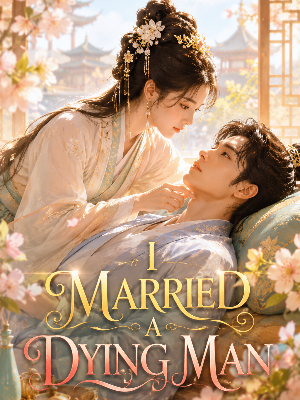
Then a woman I had married for her competence took my pulse on our wedding night before she looked at my face, and read a monitor I'd been counting on the best cardiologists in the country to misread, and told me inside two minutes that I wasn't dying the way everyone had been paid to believe.
I had chosen her the way I chose everything then — coldly. I needed a toxicologist off the grid, and I'd traced the only two people in the city who'd ever named the thing in my blood to a failing clinic on Rowan Street. I sent a man to audition the daughter. He came back and told me that on her way to marry a man the whole city was burying, she'd stopped for donuts and eaten three of them in the car.
I thought: this one won't fall apart on me.
I did not think, then, that she would take the thing apart in me that I'd spent twenty years welding shut. That's the part that wasn't in the plan.
I started sending the donuts the first week. The cheap sugared ones from the bakery near her father's clinic, a forty-minute drive I paid a man to make every morning so a box would be sitting there when she woke. When she asked, I said I didn't see any donuts. I don't fully understand why I lied about it, except that it was the one thing I gave her that wasn't part of the arrangement, and I wanted to keep it that way — outside the contract, unbilled, mine.
She'll tell you the case was the thing that made us. It wasn't. The case nearly cost us everything, including a woman we both grieve. What made us was smaller and quieter and happened in the dry hours — an argument about a hot dog, a shabby waiting room where I watched her stitch a stranger's kid and understood for the first time what she'd been keeping herself sharp for. She spent her whole life certain that being accurate was better than being kind, and never once noticed she was the kindest person I'd ever met, in the only way she trusted: she just kept people alive.
She kept me alive.
Rowan Street doesn't leak anymore. The clinic her mother started has a new roof and a new name over the door that is the same as the old name, because she wouldn't hear of changing it, and a wing behind it now — a real one, with real equipment, a small independent toxicology practice where the daughter works the mornings her father used to. Her father consults again. He'd been afraid for fifteen years and now he isn't, and it turns out a man can get some of that time back.
I sit at the front counter some mornings with a coffee and I watch her tell an old man with gout that no, absolutely not, he cannot have the rice wine, and I slide a box of donuts across the counter, and I don't deny it anymore.
People in the city still tell the story wrong. The dying heir, the deathbed marriage, the girl who was supposed to inherit — and then somehow he didn't die, and a scandal took down half the family, and the two of them ended up running a free clinic on Rowan Street like a pair of people with no fortune at all.
Now and then someone asks me, half-joking:
"Weren't you supposed to be dying?"
And I look across the counter at the woman reading a rhythm strip like it personally lied to her, sleeves shoved up, frowning at a heart that dared to skip.
"I was," I tell them. "She just wouldn't let me."
The End